Most expensive car repairs don’t start expensive. A worn timing belt that should have been replaced for a modest fee snaps and wrecks the engine. Tyres run underinflated for months and wear out early. Brake pads squeal for weeks before the metal starts grinding the discs. In almost every case, a simple maintenance schedule would have caught the problem cheaply.
This guide lays out a practical car maintenance schedule: what to check every month, what to service at regular intervals, and the warning signs that mean “book a mechanic now.” Your owner’s manual is always the final authority for your specific car, but this checklist covers what applies to most petrol, diesel and hybrid vehicles.
Why a Maintenance Schedule Matters
- Safety: brakes, tyres, lights and steering are what keep you on the road
- Lower running costs: small, scheduled jobs prevent big unscheduled ones
- Better fuel economy: correct tyre pressure, clean filters and fresh oil all help
- Higher resale value: a full service history can noticeably improve what buyers will pay
- Warranty protection: many manufacturers require on-time servicing to honour warranties
Monthly Checks You Can Do Yourself (10 Minutes)
- Tyre pressure, including the spare, checked when tyres are cold. The correct figure is usually on a sticker inside the driver’s door or in the manual.
- Tyre tread and condition: look for uneven wear, cuts, bulges or embedded objects.
- Engine oil level on the dipstick, with the car on level ground.
- Coolant level in the expansion tank. Only check when the engine is cold.
- Windscreen washer fluid.
- All lights: headlights, indicators, brake lights and reverse lights.
- Wiper blades: replace if they smear or squeak.
Tyres deserve special attention, because they’re your only contact with the road. The US National Highway Traffic Safety Administration’s tyre safety guidance is a useful reference on pressure, tread and ageing. For choosing replacements, see our guides on choosing tyres for SUVs and the best tyres for South Asian road conditions.
The Core Service Schedule
Intervals vary by manufacturer, engine type, oil grade and driving conditions. Use this as a typical guide and confirm with your manual.
| Item | Typical interval | Why it matters |
|---|---|---|
| Engine oil and oil filter | Every 5,000–15,000 km or 6–12 months (per manual) | Lubricates and cools the engine; old oil causes wear |
| Air filter | Every 15,000–30,000 km; sooner in dusty areas | Clean air improves performance and economy |
| Cabin (AC) filter | Every 15,000–25,000 km or yearly | Air quality inside the car; AC efficiency |
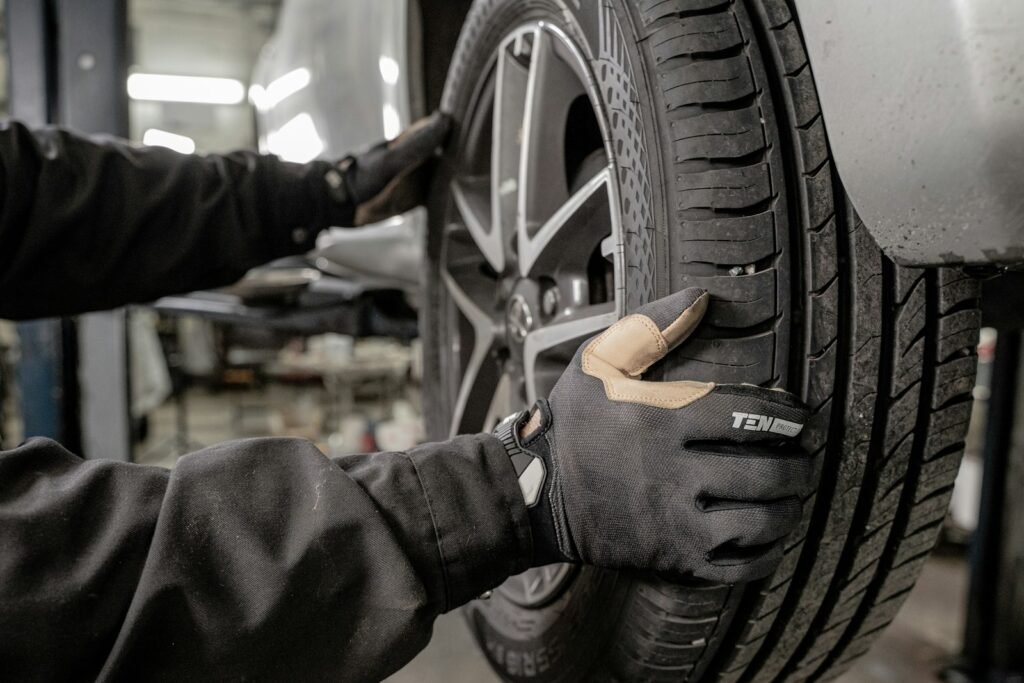
| Tyre rotation and wheel alignment | Every 10,000 km or so; alignment if steering pulls | Even wear, longer tyre life, straight tracking |
| Brake pads and discs inspection | Every service | Stopping power and safety |
| Brake fluid | Every 2 years (typical) | Fluid absorbs moisture, reducing braking performance |
| Coolant replacement | Every 2–5 years depending on type | Prevents overheating and corrosion |
| Spark plugs (petrol) | Every 30,000–100,000 km depending on plug type | Smooth running and fuel efficiency |
| Timing belt (if fitted) | Per manual, often 60,000–150,000 km | Failure can destroy the engine |
| Transmission fluid | Per manual; varies widely | Smooth shifting, gearbox life |
| 12V battery test | Yearly after 2–3 years old | Avoids no-start surprises |
“Severe” Driving Conditions: Service More Often
Many manuals list a shorter schedule for severe conditions, and many drivers in South Asian cities fall into this category without realising it. Severe use typically includes:
- Stop-start city traffic and long idling
- Very hot climates
- Dusty or unpaved roads
- Frequent short trips where the engine doesn’t fully warm up
- Towing or carrying heavy loads
If this sounds like your daily drive, follow the severe schedule, especially for oil, air filters and brake checks.
Warning Signs You Shouldn’t Ignore
- Dashboard warning lights, especially oil pressure, engine temperature, brake or battery lights
- Squealing or grinding when braking
- Steering pulling to one side or a vibrating steering wheel
- Smoke: blue (burning oil), white and sweet-smelling (possible coolant leak) or black (rich fuel mixture)
- Puddles under the car: note the colour. Green, pink or orange may be coolant; brown or black, oil; red, transmission or power steering fluid
- Rising temperature gauge: pull over safely and switch off before damage occurs
- Hard starting or dimming lights, often a weak battery or charging fault

Hybrid and Electric Vehicles
Hybrids still need most of the schedule above, including oil changes, though brake pads often last longer thanks to regenerative braking. Fully electric vehicles skip oil, spark plugs and timing belts, but still need tyre care, brake fluid, cabin filters, coolant for battery thermal systems, and software updates. Follow the manufacturer’s schedule, which is often based on time as much as distance.
How to Keep Maintenance Costs Down
- Do the monthly checks yourself. They’re free and catch problems early.
- Compare dealer and independent workshops. Reputable independent garages are often cheaper for out-of-warranty cars.
- Ask for an itemised quote and the old parts back.
- Use the correct oil grade and quality parts. Cheap parts often cost more later.
- Bundle jobs: replacing the water pump during a timing belt job, for example, saves labour.
- Keep a service log with dates, kilometres, work done and receipts.
What You Can DIY vs What Needs a Garage
Knowing where to draw the line saves money without risking safety.
Usually safe to do yourself
- Checking and topping up oil, coolant and washer fluid
- Checking tyre pressure and tread
- Replacing wiper blades and many cabin air filters
- Replacing some bulbs, depending on the car
- Cleaning battery terminals, with care and the correct order of disconnection
Best left to a professional
- Brake pads, discs and brake fluid
- Timing belts, water pumps and anything involving engine timing
- Transmission fluid changes on modern automatic gearboxes
- Wheel alignment and suspension work
- Hybrid and EV high-voltage systems, which should never be touched without training
If you’re unsure, ask your mechanic to show you how to do the simple checks during your next service. Most are happy to, and you’ll spot problems earlier.
A Simple Yearly Calendar
- Before summer: AC check, coolant level, battery test and tyre pressure, since heat raises pressure
- Before monsoon or winter: wipers, tyre tread depth, lights and brakes
- Before a long road trip: full fluid check, tyres including spare, brakes, lights and emergency kit
Frequently Asked Questions
How often should I really change my engine oil?
Follow your manual. Modern synthetic oils often allow longer intervals, but severe driving conditions mean changing it sooner.
Is it OK to skip a service if the car seems fine?
Many problems are invisible until they become expensive. Skipping services can also affect warranty claims and resale value.
Do I need to service my car at the dealership?
Not necessarily. In many places independent garages can service cars under warranty if they follow the manufacturer’s schedule and use correct parts. Keep detailed receipts.
How do I know if my car has a timing belt or chain?
Check your owner’s manual or ask a mechanic. Chains usually last much longer, while belts have strict replacement intervals.
The Bottom Line
A car maintenance schedule isn’t complicated: ten minutes of checks each month, regular oil and filter changes, brake and tyre inspections at every service, and attention to warning signs. Follow your manual, adjust for severe driving, keep records, and your car will be safer, cheaper to run and worth more when it’s time to sell. Explore more guides in our Automotive section.