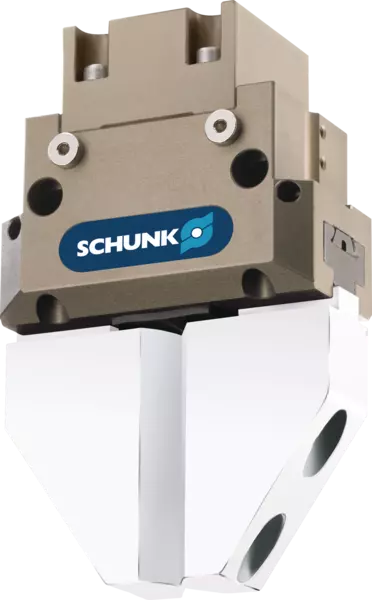
Industrial automation has become a cornerstone of modern manufacturing, enabling businesses to improve productivity, maintain consistent quality, and optimise operational efficiency. As industries embrace robotics to perform repetitive, high-precision tasks, end-of-arm tooling (EOAT) has become increasingly important in determining the performance and flexibility of robotic systems. Among the most widely used EOAT solutions are the universal robot gripper and the vacuum gripping system, both of which enable robots to handle a wide variety of components with speed, precision, and reliability.
Whether used in automotive manufacturing, electronics, logistics, food processing, packaging, pharmaceuticals, or metalworking, advanced robotic gripping technologies help manufacturers automate complex handling operations while improving workplace safety and production efficiency. Selecting the right gripping solution is therefore essential for achieving maximum return on automation investments.
Understanding Robotic Gripping Technology
A robot is only as effective as the tool attached to its arm. While robotic arms provide movement and positioning, grippers perform the actual task of picking, holding, transferring, assembling, and placing workpieces.
Modern manufacturing environments often require robots to handle products of different sizes, weights, shapes, and materials. This demand has led to the development of versatile gripping technologies capable of adapting to multiple applications without sacrificing speed or precision.
The choice of gripper directly influences:
- Cycle time
- Positioning accuracy
- Product quality
- Operational flexibility
- Equipment utilisation
- Production efficiency
- Maintenance requirements
For this reason, manufacturers carefully evaluate gripper technologies before implementing robotic automation.
What is a Universal Robot Gripper?
A universal robot gripper is a highly adaptable end-of-arm device designed to handle multiple workpieces using a single gripping solution. Unlike application-specific grippers that are designed for only one component, universal grippers provide flexibility across various production processes.
These grippers can accommodate different product dimensions, shapes, and materials while maintaining precise handling performance.
They are widely used in collaborative robots (cobots) as well as industrial robotic systems where production flexibility is a priority.
Key Features of a Universal Robot Gripper
Modern universal grippers offer several advanced capabilities.
Flexible Component Handling
One of the biggest advantages of a universal robot gripper is its ability to handle multiple products without frequent mechanical adjustments.
This flexibility allows manufacturers to switch between production runs quickly while reducing downtime.
High Positioning Accuracy
Precision handling is critical in automated manufacturing.
Universal grippers maintain accurate positioning throughout pick-and-place operations, assembly, machine tending, and packaging applications.
Consistent positioning improves overall product quality while reducing production errors.
Compact Design
Manufacturing environments often have limited workspace.
Compact gripper designs allow robots to operate efficiently within confined production cells while maintaining full functionality.
Easy Integration
Most modern grippers are designed for straightforward integration with industrial robots and collaborative robots.
This simplifies installation while reducing implementation time.
Reliable Performance
Industrial automation demands continuous operation.
Universal robot grippers are engineered for durability, offering consistent gripping performance across high-cycle production environments.
Applications of Universal Robot Grippers
Their versatility makes them suitable for numerous industries.
Common applications include:
- Machine tending
- Pick-and-place operations
- Assembly automation
- Packaging
- Material handling
- Electronics manufacturing
- Automotive production
- Plastic moulding
- Medical device manufacturing
- Logistics automation
Their adaptability enables manufacturers to automate multiple tasks using fewer specialised tools.
What is a Vacuum Gripping System?
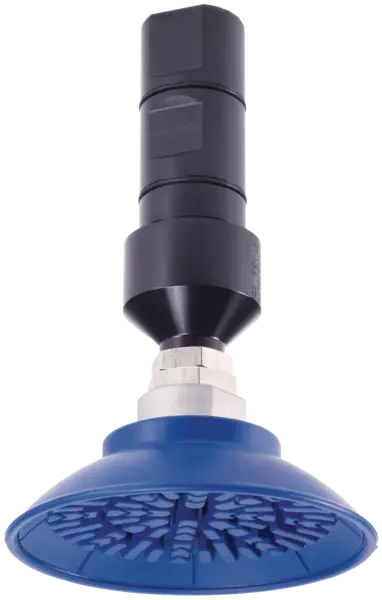
A vacuum gripping system uses negative air pressure to securely lift and move workpieces without relying on mechanical fingers.
Instead of physically clamping components, vacuum systems generate suction using vacuum cups that adhere to the surface of an object during handling.
This makes them particularly suitable for delicate, flat, lightweight, or fragile products that require gentle handling.
How a Vacuum Gripping System Works
The operating principle is relatively straightforward.
The system creates a pressure difference between the vacuum cup and the surrounding atmosphere.
Once sufficient suction is generated, the workpiece is securely held and transported to its destination.
After positioning, the vacuum is released, allowing the component to be placed accurately without damage.
This simple yet effective mechanism enables fast and reliable automation across numerous industries.
Advantages of Vacuum Gripping Systems
Gentle Product Handling
Vacuum gripping systems minimise mechanical contact with products.
This reduces the risk of scratches, deformation, or surface damage during handling.
They are ideal for sensitive materials such as:
- Glass
- Electronics
- Plastic components
- Cardboard
- Metal sheets
- Food packaging
Faster Cycle Times
Vacuum gripping systems can grip and release products quickly, supporting high-speed production environments.
Reduced handling time contributes directly to increased productivity.
Improved Flexibility
Vacuum cups are available in various shapes, sizes, and materials.
This allows manufacturers to configure systems for different products and production requirements.
Enhanced Automation Efficiency
Reliable gripping minimises production interruptions while improving process consistency.
Stable handling also reduces product rejection rates.
Lower Mechanical Complexity
Compared to some mechanical gripping solutions, vacuum systems often require fewer moving parts.
This can simplify maintenance and improve long-term reliability.
Industries Using Vacuum Gripping Systems
Vacuum technology supports automation across numerous manufacturing sectors.
Examples include:
- Automotive manufacturing
- Electronics assembly
- Semiconductor production
- Food and beverage
- Pharmaceutical packaging
- Warehousing
- Logistics
- Consumer goods manufacturing
- Solar panel manufacturing
- Glass processing
Its versatility continues to expand as automation technologies evolve.
Universal Robot Gripper vs Vacuum Gripping System
Although both technologies support robotic automation, they serve different operational requirements.
A universal robot gripper is generally preferred when handling components with varying geometries that require secure mechanical gripping.
A vacuum gripping system is better suited for flat, smooth, lightweight, or delicate products where non-contact mechanical handling helps protect product integrity.
Many automated production lines successfully integrate both technologies depending on the specific manufacturing process.
Factors to Consider When Selecting a Gripping Solution
Selecting the appropriate gripping technology requires evaluating several operational factors.
These include:
- Workpiece size
- Surface characteristics
- Weight
- Material type
- Production speed
- Robot payload
- Environmental conditions
- Cycle time
- Precision requirements
- Future production flexibility
Careful evaluation helps manufacturers maximise automation performance while reducing operational costs.
Future Trends in Robotic Gripping Technology
Industrial automation continues to evolve through innovations in artificial intelligence, machine vision, digital twins, and smart manufacturing.
Future robotic grippers are expected to incorporate:
- AI-assisted gripping
- Vision-guided positioning
- Smart sensors
- Predictive maintenance
- Adaptive gripping technologies
- Collaborative automation
- Real-time process monitoring
- Digital integration with Industry 4.0 platforms
These advancements will further improve manufacturing flexibility, efficiency, and productivity.
Conclusion
Both the universal robot gripper and the vacuum gripping system play a vital role in modern industrial automation by improving precision, productivity, and operational flexibility. Selecting the right gripping technology depends on the application, workpiece characteristics, and production objectives. As manufacturing continues moving towards smart factories and Industry 4.0, advanced robotic gripping solutions will remain essential for achieving efficient, reliable, and scalable automation. SCHUNK continues to develop innovative automation technologies that help manufacturers optimise robotic handling applications while supporting higher productivity, improved quality, and long-term operational excellence.