
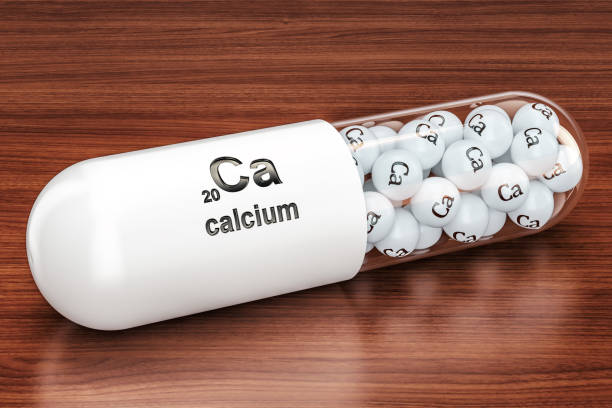
A calcium tablet is a food supplement. It supplies calcium as a salt the body can absorb, usually calcium carbonate or calcium citrate, often with vitamin D added. Anyone searching for the best calcium tablets for women is usually after something narrower: how much calcium one tablet actually contains, and whether a supplement is needed at all. A ranked list cannot settle either question, because the same tablet suits a woman of twenty-five, a pregnant woman and a man of sixty-five differently. A buyer’s guide can set out the criteria; the choice belongs to the person taking the tablet.
Who actually needs a calcium supplement
The NHS states that most people should be able to get all the calcium they need from a varied and balanced diet. Milk, curd, paneer, ragi and green leafy vegetables all carry it. A supplement covers the gap between diet and need, and whether such a gap exists in a particular person is a medical finding.
Low calcium is not something a person can work out from symptoms. Cramps, tiredness and aching joints have many causes, and none confirms a shortage of any nutrient. A doctor decides whether a supplement is needed, sometimes after tests.
Products sold as bone health tablets need no prescription. In India they are regulated as food rather than as medicine, by the Food Safety and Standards Authority of India, whose regulations govern what they may contain and what the label says.
What to read on the label
Elemental calcium is the number that matters: the calcium itself, as against the weight of the whole salt. The NIH Office of Dietary Supplements gives calcium carbonate as about 40% calcium by weight and calcium citrate as about 21%, so two tablets of similar size can supply different amounts. Labels carry that figure, according to the same source.
Salt form also changes how a tablet behaves. Calcium carbonate is absorbed best with food, calcium citrate with or without it, and people with low stomach acid, which is more common in older people, absorb citrate more easily, according to the NIH Office of Dietary Supplements.

Many bone health tablets add vitamin D, which the same source explains helps the body absorb calcium. Each addition is one more thing to check against medical advice. Someone comparing the best calcium tablets for women across two boxes is comparing three things: the salt, the elemental calcium figure, and what has been added.
Why there is no single answer to the best calcium tablets for women
ICMR-NIN, which sets nutrient requirements for Indians, publishes recommended dietary allowances that differ by age, by sex, and by whether a woman is pregnant or breastfeeding. Those figures belong with the doctor reading them.
Pregnancy and breastfeeding are periods when a supplement is commonly prescribed, and the product and amount are the prescriber’s decision.
After menopause, bone loss speeds up, a pattern described by the NIH Office of Dietary Supplements. Calcium and vitamin D are part of what a doctor reviews then. A teenage daughter and a grandmother in the same house may both be taking something, and their requirements are not the same.
What is different about calcium tablets for men
Men’s bone health gets less attention in this category, and the market follows. A search for the best calcium tablets for men returns much of the same product range. A pack marked for men does not indicate different chemistry, and the elemental calcium figure is still where a comparison starts.
ICMR-NIN publishes recommended dietary allowances separately for men and women, and by age group within each. What pushes a man towards a supplement tends to be dietary or medical: little milk in the diet, difficulty digesting lactose, or long-term use of certain medicines. A history of kidney stones is worth raising in that conversation. Where the best calcium tablets for men question has an answer of its own, it usually comes from a man’s diet or his prescription list.
What is available in India, and what the price differences mean
Searches such as calcium supplements India return imported brands, Indian brands and generic products, sold in pharmacies and online. Most are built on the same few salts, which is why the label does more work than the brand name. Two products with the same salt and the same elemental calcium figure can sit at different prices. A generic medicine is the same medicine sold under its chemical name instead of a brand name. Calcium supplements in India are regulated as food, so the comparison runs on the label.
Medkart has sold generic medicines through their own stores and online medicine website since 2014, and their website lists nutritional supplements as one of its categories. So, if you are looking to buy medicine online, you can visit them at medkart . in.
What to ask a doctor or pharmacist before starting one
Calcium gets in the way of some medicines: the NIH Office of Dietary Supplements lists levothyroxine, taken for an underactive thyroid, quinolone antibiotics and lithium among those affected. Anyone already on a prescription has reason to raise a supplement with a doctor or pharmacist. The same source records gas, bloating and constipation as effects some people get.
A pharmacist can say which salt a tablet contains, how much elemental calcium it lists, and what else has been added. The doctor’s questions are whether a supplement is needed at all and for how long. Pregnancy, breastfeeding, the years after menopause, older age and any existing prescription each move that decision firmly to the doctor.
Reading the label, then asking
Calcium tablets differ in a small number of real ways: the salt, the elemental calcium figure, and what has been added alongside. What cannot be read off a box is whether a supplement is needed at all, and that is the part any ranking of the best calcium tablets for women or men leaves out. Anyone considering one can take the pack to a pharmacist and ask what is in it, or compare what is listed and at what price on Medkart’s website before putting the question to a doctor.
Frequently asked questions
What does elemental calcium mean on a tablet label? It is the amount of calcium itself, separate from the weight of the salt carrying it. The NIH Office of Dietary Supplements states that supplement labels carry this figure, so no calculation is needed.
Is calcium citrate better than calcium carbonate? Neither is better in general. The NIH Office of Dietary Supplements notes that carbonate is absorbed best with food, while citrate is absorbed with or without food and suits people with low stomach acid.
Can a person tell from symptoms that they need calcium? No. Cramps, tiredness and joint pain have many possible causes and do not confirm a shortage of any nutrient. Whether a supplement is needed is a decision for a doctor, sometimes after tests.
Do calcium supplements affect other medicines? They can. The NIH Office of Dietary Supplements lists levothyroxine, quinolone antibiotics and lithium among medicines affected by calcium. Anyone on a prescription should raise it with a doctor or pharmacist.
Disclaimer. This article is general information about calcium supplements and how their labels are read. It is not a substitute for professional medical advice, diagnosis or treatment. No supplement or medicine should be started, stopped or changed without the advice of a doctor or pharmacist who knows the person’s medical history and current prescriptions. Anyone who is pregnant or breastfeeding, is taking prescription medicines, or has an existing medical condition should speak to a doctor before starting a calcium supplement.
References
- NHS. Calcium (Vitamins and minerals). https://www.nhs.uk/conditions/vitamins-and-minerals/calcium/
- NIH Office of Dietary Supplements. Calcium: Fact Sheet for Health Professionals. https://ods.od.nih.gov/factsheets/Calcium/HealthProfessional/
- NIH Office of Dietary Supplements. Calcium: Fact Sheet for Consumers. https://ods.od.nih.gov/factsheets/Calcium-Consumer/
- ICMR-NIN Expert Group on Nutrient Requirements for Indians. Recommended Dietary Allowances (RDA) and Estimated Average Requirements (EAR), 2020. https://www.nin.res.in/RDA_Full_Report_2024.html
- Food Safety and Standards Authority of India. Compendium of Food Safety and Standards (Health Supplements, Nutraceuticals, Food for Special Dietary Use, Food for Special Medical Purpose, Functional Food and Novel Food) Regulations. https://fssai.gov.in/upload/uploadfiles/files/Compendium_Nutra_29_09_2021.pdf