


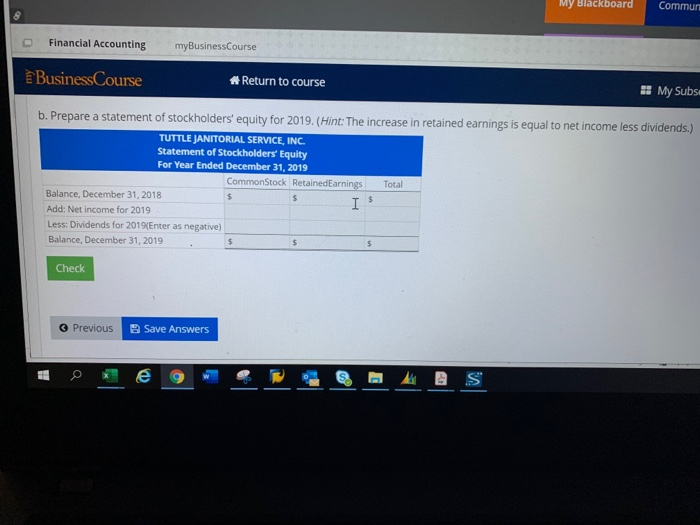
For students navigating the challenging waters of an introductory business course, the search for a “my business course answer key” is a common refrain. It’s understandable: when faced with complex Excel simulations, multiple-choice quizzes on the business life cycle, or case studies about organizational structures, the temptation to look for quick answers is strong. However, true learning in business education isn’t about finding the right answers; it’s about understanding the process of getting there.
This article serves as your ultimate guide to using the resources available within the myBusinessCourse (mBC) platform effectively. We will explore how to use integrated tools like the “Check My Work” feature, understand the logic behind different question types, and look beyond the platform to build a robust understanding of core business principles. Instead of just providing answers, we will provide you with the answer key to learning itself.
The Illusion of the Simple Answer Key
Many students hope to find a simple PDF or a list of letters (A, B, C, D) that corresponds to their myBusinessCourse assignments. The reality, however, is more complex. Business education platforms like mBC are designed to test application, not just memorization. For instance, a question about the Business Life Cycle isn’t just asking for a definition; it’s asking you to apply that concept to a scenario .
Consider a typical question: “Which of the following statements best describes the Business Life Cycle?” While the direct answer might be “It describes the stages a business goes through from inception to closure,” a good course will then ask you to identify which stage a company is in based on its challenges . The my business course answer key isn’t a cheat sheet; it’s the logical reasoning that leads you to that conclusion.
Furthermore, many assignments are not simple multiple-choice questions. Platforms like myBusinessCourse are renowned for their integrated Excel assignments. These questions require you to build formulas and manipulate data in a live spreadsheet environment . There is no static answer key for these because the correct answer is a dynamic formula that calculates the right result based on the provided inputs.
Leveraging the “Check My Work” Feature
So, if there is no traditional answer key, how can you verify you are on the right track? The myBusinessCourse platform includes a powerful tool called “Check My Work.” This is the closest thing to an official answer key, and it is designed to be a learning aid, not just a grading tool .
When enabled by your instructor, the “Check My Work” feature allows you to receive immediate feedback during your attempt. By clicking this button in the myBusinessCourse panel, your correct answers are highlighted in green, and incorrect ones in red . This is invaluable because it allows you to:
-
Identify Mistakes Immediately: You don’t have to wait days for feedback. You know right away if your logic for a break-even analysis or a marketing mix question is off.
-
Understand the “Why”: For integrated Excel questions, the feedback can help you trace your errors. Did you use the wrong cell reference? Did you forget to calculate the one percent discount for early payment correctly? The instant feedback prompts you to revisit your process .
-
Learn Iteratively: You can use the feature to check your work, rethink your approach, and try again. This trial-and-error process, guided by instant feedback, cements learning far more effectively than simply copying from an answer key.
Decoding the Questions: What Are You Really Being Asked?
To effectively use the “Check My Work” feature, you must first understand what the question is asking. Many business concepts are interconnected. For example, a question about a company’s Vision Statement is fundamentally different from one about its Mission Statement. A vision statement communicates the organization’s long-term aspirations, while a mission statement addresses the organization’s current purpose and values . Knowing the distinction is the real answer key.
Here is how to decode common question types:
-
SWOT Analysis: Questions about SWOT require you to categorize factors as internal (Strengths and Weaknesses) or external (Opportunities and Threats). For instance, “the only facility in the area to offer water aerobics” is a Strength, while “a new competitor entering the market” is a Threat .
-
Ownership Structures: You need to know the difference between a Sole Tradership, Partnership, and Corporation. A trick question might ask which is NOT a common structure, with “Non-governmental organization (NGO)” being the correct outlier .
-
Financial Literacy: Questions about profitability, market share, and competitiveness require you to understand the nuances. For example, profitability is the amount of money a business earns after expenses, not just the total revenue . Similarly, if a customer pays early and gets a discount, you must know how to record the actual cash received in the cash receipts journal .
Going Beyond the Platform: Building Your Knowledge Base
While the myBusinessCourse platform provides excellent tools, broadening your understanding through external resources can provide the context needed to find the right answers on your own. The following resources can act as your supplemental answer key:
-
Open Educational Resources (OER): Websites like OpenStax offer free, peer-reviewed textbooks. For example, their “Principles of Marketing” book breaks down complex topics like the BCG Matrix (cash cows, stars, question marks) and Key Performance Indicators (KPIs) in a digestible way . Understanding these concepts from a different source can make the material in your mBC course click.
-
Online Learning Platforms: Lumen Learning provides complete business courses with case studies (like the “Salty Pawz” dog treat company) that apply theoretical knowledge to real-world scenarios. Seeing how concepts like supply and demand or the four Ps of marketing (Product, Price, Place, Promotion) apply to a fictional business helps build the analytical skills needed for your own graded assignments .
-
Wikipedia for Background: While not a citable source for academic papers, Wikipedia is an excellent starting point for understanding broad concepts. Need a quick refresher on the difference between a corporation and a partnership? Looking for a breakdown of the Uniform Commercial Code (UCC) mentioned in a business law question? Wikipedia can provide that foundational overview.
-
Link: Wikipedia: Business
-
Conclusion: The Real Answer Key is Understanding
The quest for a “my business course answer key” is a natural part of the student experience. However, the most successful students are those who realize that the path to an “A” is not through finding a list of correct letters, but through mastering the concepts. By leveraging the built-in pedagogical tools of the myBusinessCourse platform—specifically the “Check My Work” feature—and supplementing your course materials with reputable external resources, you build a durable understanding of business.