
1. Why Your Current Method Might Be Failing
Before we dive into the perfect method, let’s understand what goes wrong with hard boiled eggs. The most common issues—difficult peeling, rubbery texture, and discolored yolks—stem from a few simple mistakes:
-
Using eggs that are too fresh: Contrary to what you might think, very fresh eggs are actually harder to peel. As eggs age, the air pocket inside expands and the pH level changes, which helps separate the membrane from the shell. This is why farm-fresh eggs straight from the chicken can be particularly frustrating to peel.
-
Overcooking: This is the main culprit behind rubbery egg whites and that greenish-grey ring around the yolk. The discoloration occurs when eggs are cooked too long or at too high a temperature, causing a chemical reaction between the iron in the yolk and sulfur in the white.
-
Improper cooling: Skipping the ice bath or not cooling eggs quickly enough allows residual heat to continue cooking the eggs, leading to overcooking even after they’re removed from the heat source.
-
Starting with boiling water: Placing cold eggs directly into boiling water increases the likelihood of cracking due to thermal shock, and can also make peeling more difficult.
2. The Foolproof Method: How to Make Hard Boiled Eggs
Follow these simple steps for consistently perfect hard boiled eggs:
Step 1: Preparation
-
Select your eggs: For easiest peeling, use eggs that are at least 7-10 days old. If you only have fresh eggs, you can still use them but may need to employ additional peeling techniques.
-
Place eggs in a single layer in a saucepan or pot. Don’t overcrowd the pan—eggs should have space around them.
-
Cover the eggs with cold water by at least one inch (approximately 2.5 cm). The cold water start is crucial for even cooking and easier peeling.
Step 2: Cooking Process
-
Place the pot on the stove over high heat and bring to a rolling boil.
-
As soon as the water reaches a full boil, immediately remove the pot from heat and cover with a tight-fitting lid.
-
Let the eggs sit in the hot water for the appropriate time:
-
9-10 minutes: For softer, creamier yolks
-
11-12 minutes: For firmer, fully set yolks
-
Pro Tip: The size of your eggs matters. These times are for large eggs. Adjust slightly—decrease by about 1 minute for medium eggs, increase by 1-2 minutes for extra-large or jumbo eggs.
Step 3: Cooling and Peeling
-
While the eggs are resting in the hot water, prepare an ice bath by filling a large bowl with cold water and ice.
-
When the time is up, use a slotted spoon to transfer the eggs to the ice bath.
-
Let them chill for at least 14-15 minutes. This rapid cooling stops the cooking process completely and creates a slight contraction that helps separate the membrane from the shell, making peeling easier.
-
To peel, gently tap the egg on a hard surface to crackle the shell all over, then roll it gently between your hands. Start peeling from the wider end (where the air pocket is), and the shell should come off in larger pieces. Running the egg under cold water while peeling can help remove stubborn shell fragments.
For visual guidance on this process, you might find additional techniques at Love & Lemons, which offers a similar reliable method.
3. Expert Tips for Perfect Results Every Time
Choosing and Preparing Eggs
-
Age matters: For the easiest peeling, use eggs that have been in your refrigerator for a week or more. As mentioned earlier, older eggs peel more easily than very fresh ones.
-
Room temperature trick: Some experts recommend letting eggs come to room temperature for about 15-30 minutes before cooking to reduce the chance of cracking, though this is less critical with the cold-water-start method.
-
The upside-down storage trick: For centered yolks (especially important for deviled eggs), store your raw eggs upside down in the carton for a day or two before boiling. This helps position the yolk in the center of the white.
Cooking Adjustments
-
Altitude adjustments: If you live at high altitude, water boils at a lower temperature, so you’ll need to increase the sitting time by 1-2 minutes.
-
Gas stove consideration: If using a gas stove, residual heat in the burner may continue cooking the eggs even after you’ve turned off the flame. You may want to move the pot to a different burner or reduce the sitting time slightly.
-
Quantity doesn’t change time: Whether you’re cooking 2 eggs or 12, the cooking time remains the same as long as they’re in a single layer.
Peeling Techniques
-
The tap-and-roll method: After cooling, tap the egg all over on a hard surface, then gently roll it to crackle the shell uniformly before peeling.
-
Peel under water: Peeling eggs under a thin stream of running water or while submerged in a bowl of water helps wash away tiny shell fragments and can make the process smoother.
-
Start at the air pocket: Always begin peeling from the wider end of the egg where the air pocket is located—this gives you a starting point to get under the membrane.
4. Testing Doneness and Troubleshooting
How to Tell If Your Eggs Are Perfectly Cooked
-
The spin test: A perfectly hard boiled egg will spin smoothly and rapidly on a flat surface. A raw or undercooked egg will wobble.
-
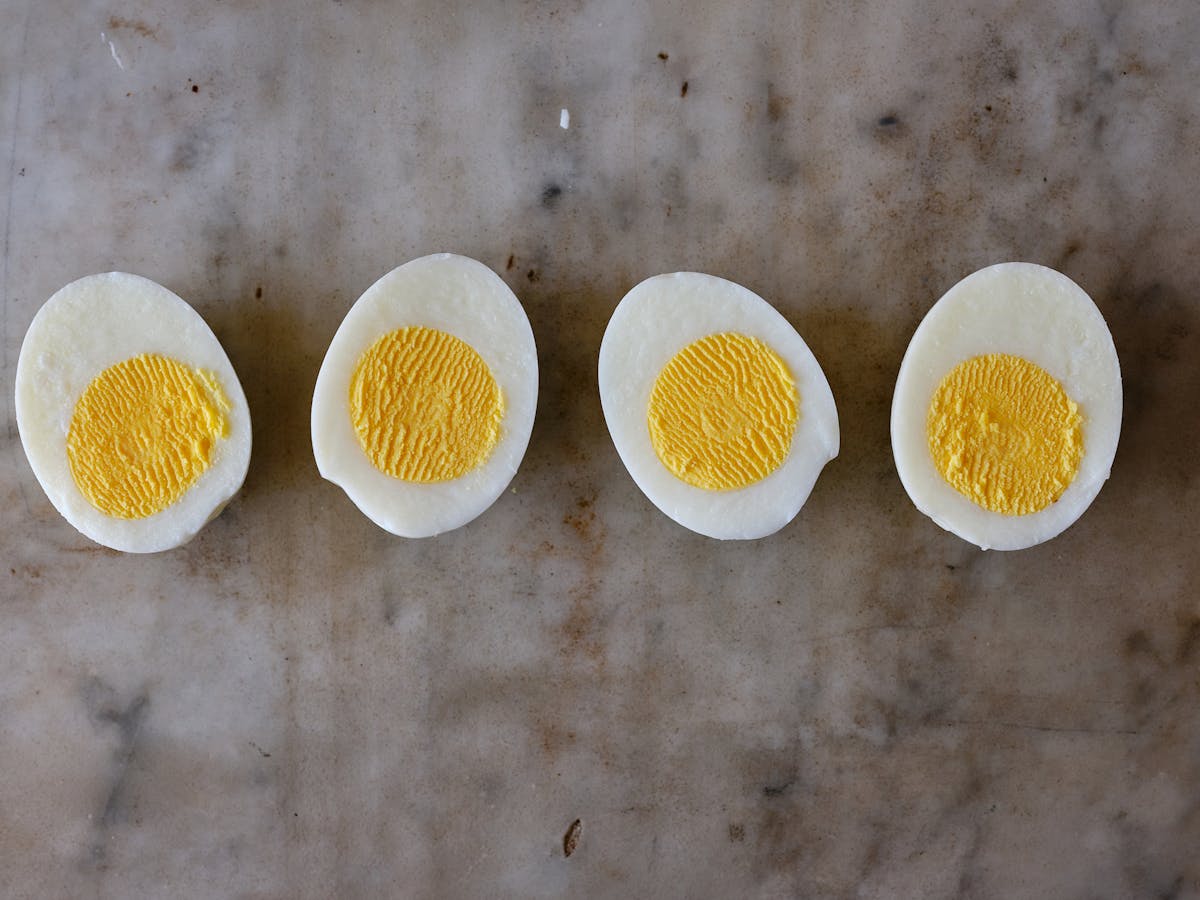
Visual check: When you slice open a perfectly cooked hard boiled egg, the yolk should be uniformly yellow with no green or grey ring, and the white should be completely set but not rubbery.
Common Problems and Solutions
-
Green/grey yolks: Caused by overcooking or not cooling quickly enough. Reduce cooking time and ensure you transfer eggs immediately to an ice bath.
-
Difficult to peel: Usually caused by very fresh eggs or insufficient cooling. Use older eggs when possible, and ensure a complete ice bath for at least 14 minutes.
-
Cracked eggs: Can result from boiling too vigorously or adding cold eggs to already boiling water. Always start with cold water and bring to a gentle boil.
-
Rubbery texture: Overcooking is the culprit. Reduce the sitting time in hot water by 1-2 minutes.
For additional troubleshooting and methods, you can refer to resources like the Eggs.ca guide which offers science-based tips for perfect eggs.
5. Storage and Food Safety
Storing Hard Boiled Eggs
-
Unpeeled eggs: Store in a sealed container in the refrigerator for up to one week. The shell helps protect the egg from absorbing odors and moisture loss.
-
Peeled eggs: Store in a container covered with cold water (change water daily) or wrapped tightly in plastic wrap for up to 5 days.
-
For longer storage: Hard boiled eggs can be frozen for up to 3 months, though the texture of the whites may become slightly rubbery. It’s best to remove the yolks and freeze them separately for use in recipes.
Food Safety Considerations
-
Always refrigerate hard boiled eggs within 2 hours of cooking.
-
If you’re taking hard boiled eggs for lunch or a picnic, pack them with a cold source like an ice pack.
-
When in doubt, do the smell test—spoiled eggs will have an unmistakable sulfurous odor.
6. Creative Ways to Use Your Perfect Hard Boiled Eggs
Now that you’ve mastered how to make hard boiled eggs, here are some delicious ways to enjoy them:
Classic Preparations
-
Deviled eggs: Mash the yolks with mayonnaise, mustard, and seasonings, then pipe back into the whites.
-
Egg salad: Chop eggs and combine with mayonnaise, celery, onion, and herbs for sandwiches or lettuce cups.
-
Cobb salad: Slice or quarter eggs to top this classic salad with bacon, avocado, tomatoes, and blue cheese.
International Dishes
-
Ramen topping: Halved hard boiled eggs are a classic ramen garnish.
-
Scotch eggs: Wrap hard boiled eggs in sausage meat, bread, and fry for a British pub classic.
-
Korean Mayak eggs: Marinate peeled hard boiled eggs in a soy-based sauce for a flavorful snack.
Simple Snacks and Meals
-
Avocado toast topping: Sliced hard boiled eggs add protein to avocado toast.
-
Rice bowl addition: Add quartered eggs to grain bowls for extra protein.
-
Simple snack: Sprinkle with salt, pepper, and paprika for a high-protein snack.
For more recipe inspiration and timing variations for different yolk consistencies, check out the BBC Good Food guide which includes creative ways to use boiled eggs.
7. Nutritional Benefits of Hard Boiled Eggs
Understanding the nutritional value makes appreciating your perfect hard boiled eggs even more rewarding:
-
High-quality protein: One large hard boiled egg contains about 6 grams of complete protein, containing all nine essential amino acids.
-
Essential nutrients: Eggs are rich in vitamins B12, D, A, and selenium, plus choline which is important for brain health.
-
Weight management: The combination of protein and healthy fats in eggs promotes satiety, which can help with weight management.
-
Eye health: Eggs contain lutein and zeaxanthin, antioxidants that support eye health.
Mastering how to make hard boiled eggs is a fundamental kitchen skill that pays dividends in meal preparation, snacks, and recipe components. The method outlined here—starting with cold water, bringing to a boil, then letting eggs sit off the heat before ice bathing—consistently delivers perfect hard boiled eggs with creamy yolks and easy-to-remove shells.
Remember that small adjustments based on your egg size, altitude, and stove type may be needed, but the core principles remain the same. With this comprehensive guide, you’re equipped to troubleshoot common problems and enjoy perfect results every time.
What’s your biggest challenge when making hard boiled eggs, and which of these techniques are you most excited to try?
References
-
Love and Lemons. (2025). How to Make Perfect Hard Boiled Eggs Every Single Time. Retrieved from https://www.loveandlemons.com/how-to-make-hard-boiled-eggs/
-
Eggs.ca. (2026). How to Make the Perfect Hard Boiled Egg. Retrieved from https://eggs.ca/eggs101/how-to-make-the-perfect-hard-boiled-egg/
-
BBC Good Food. (2026). How to boil an egg. Retrieved from https://www.bbcgoodfood.com/howto/guide/how-boil-egg-perfectly