
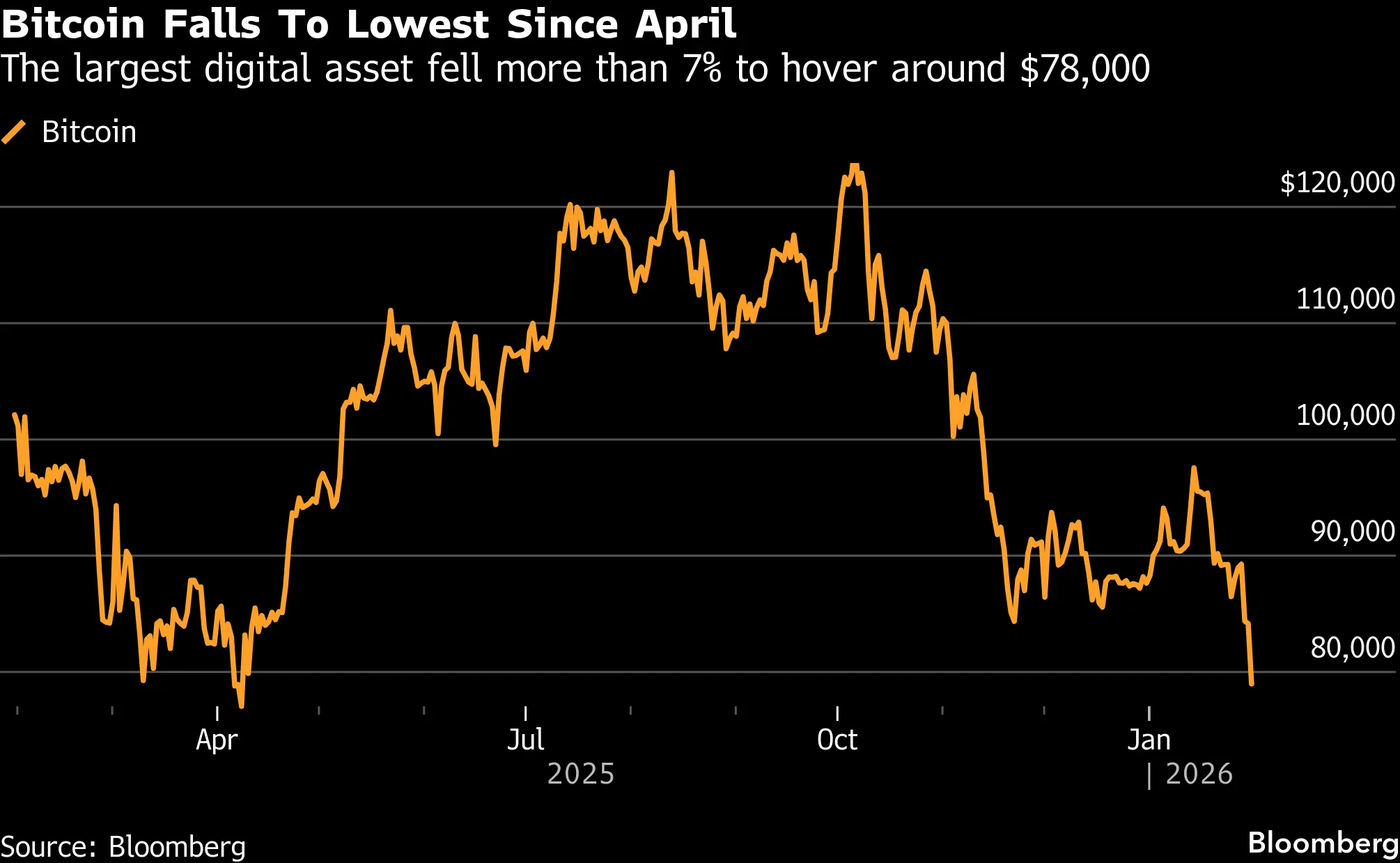
Based on the most recent and widely cited financial data, Bitcoin’s price is currently around $62,140 USD (as of May 24, 2024). Your note about a drop below $80,000 appears to be referencing a hypothetical future scenario. Below is a breakdown of Bitcoin’s current market situation, the recent correction, and key context for understanding price movements.
Here are the key details of the current situation:
-
Current Price: Approximately $62,140 USD. This represents a significant drop from its all-time high of over $73,700 in March 2024.
-
Market Context: The broader cryptocurrency market is also experiencing a downturn, with other major assets like Ethereum (ETH) seeing similar percentage declines.
-
Recent Event (ETF Inflows): A notable recent development is the first day of net outflows from U.S. Spot Bitcoin ETFs on May 1, 2024, after a long period of sustained inflows, signaling a potential shift in institutional sentiment.
-
Driving Factors: This pullback is widely attributed to a combination of shifting U.S. monetary policy expectations, broader market risk-off sentiment, and profit-taking after the historic ETF-led rally earlier this year.
-
Historical Context: Corrections of 20-30% are not uncommon in Bitcoin’s history, even within major bull market cycles.
📉 Anatomy of the Current Crypto Slide
The recent decline is a complex event driven by several converging factors, detailed in the table below.
| Factor | Description & Impact |
|---|---|
| Macroeconomic Pressure | Persistent U.S. inflation data has led markets to anticipate that the Federal Reserve will maintain higher interest rates for longer. This reduces the appeal of risk assets like Bitcoin, as it increases the opportunity cost of holding non-yielding investments. |
| Shifting ETF Flows | After months of massive inflows, the launch of U.S. Spot Bitcoin ETFs saw its first net outflow day on May 1. This change in momentum from a major source of new demand has contributed to selling pressure. |
| Market Sentiment & Leverage | The prior bullish run led to elevated levels of leveraged long positions in the market. As prices began to fall, a cascade of liquidations amplified the downward move, creating a sharp sell-off. |
| Broader “Risk-Off” Tone | Uncertainty in traditional equity markets, particularly concerning interest rates, has led investors to reduce exposure to volatile assets across the board, with cryptocurrencies being among the most affected. |
💡 What to Watch Next
If you are monitoring the market, the following developments will be critical in determining the next major move for Bitcoin:
-
Institutional ETF Flows: Watch whether the U.S. Spot Bitcoin ETFs return to consistent net inflows or if outflows continue. Sustained buying from these products is considered a key long-term support.
-
Federal Reserve Policy: Clarity on the path of U.S. interest rates will be paramount. Any signals of a shift toward rate cuts would likely be positive for crypto.
-
Key Price Levels: Market analysts often watch important support and resistance levels. A hold above major moving averages or previous cycle highs can signal strength, while breaks below can lead to further declines.
-
On-Chain Indicators: Metrics like exchange reserves (indicating holding vs. selling sentiment), the realized price, and activity of long-term holders can provide deeper insight into market phases beyond just price.
A Note on Your Mention of “$80,000”
Your reference point of Bitcoin plunging below $80,000 appears to be ahead of the current market reality. Bitcoin has never reached the $80,000 price level. Its all-time high stands at approximately $73,798, reached on March 14, 2024. The current correction is a pullback from that established high, not from an $80K threshold.
Important Disclaimer: This information is for educational purposes only and is not financial advice. Cryptocurrency markets are extremely volatile. Always conduct your own research and consider speaking with a qualified financial advisor before making any investment decisions.
How are you interpreting the current market data? Are you focusing more on short-term technical levels or long-term fundamentals like ETF adoption and macroeconomic trends?